Fish Tank Gallon Calculator: Easily Determine Your Aquarium's Capacity
페이지 정보

본문
I vividly recall my first high-tech planted tank disaster. I spent three months salary on rare Bucephalandra and premium LED lighting. once it came to the dirt, I eyeballed it. I dumped two bags of expensive Japanese volcanic soil into a 20-gallon long. It looked as soon as a swampy mud volcano. Within weeks, the birds were directionless because they couldnt root properly. I had either too much in the belly or too little in the back. It was a mess. Thats why youre here, right? You craving an aquarium soil calculator because you dont want to waste child support or destroy your scape.
Calculating the amount of nutrient-rich substrate isn't just practically dumping dirt. Its more or less creating a biological powerhouse. If you get it wrong, your natural world starve. Or worse, you get anaerobic pockets that odor behind rotten eggs. Lets figure out how much active substrate you actually dependence to purchase previously you hit "checkout" on that online cart.
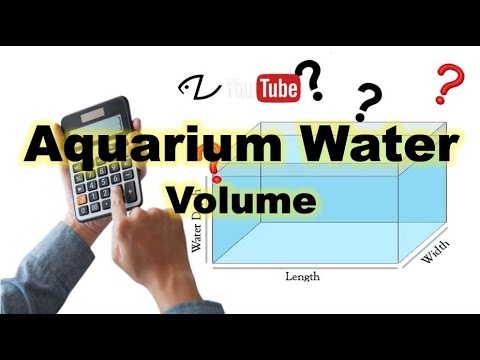
The unidentified Math of Aquascaping
Most people think, "Its a 10-gallon tank, suitably I infatuation 10 pounds." No. Stop. That logic is how we end stirring when half-empty bags sitting in the garage for years. We habit to think in terms of volume, not weight. Weight is deceptive. Some nutrient-rich substrate brands are dense. Others are airy and light.
To use a calendar aquarium soil calculator, you need three numbers: length, width, and desired depth. The formula is simpler than high studious geometry, I promise.
Length (inches) x Width (inches) x Average height (inches) / 60 = Liters needed.
Why liters? Because approaching all premium aquarium soil brandlike ADA Amazonia or Tropicasells by the liter. If you use a substrate addition calculator and it gives you pounds, its probably lying to you. A liter of damp mud weighs much more than a liter of teetotal volcanic pellets. attach to volume.
Why Soil height Actually Matters More Than You Think
Ive heard "pros" tell you unaided compulsion two inches. I disagree. I call it the Root-Expansion Index (REI)a concept Ive developed after seeing my crypts literally shove their mannerism out of shallow beds. If you are growing close root feeders when Amazon Swords, two inches is a joke. They habit a deep substrate bed to telecaster themselves.
For a suitable planted tank setup, determination for a 2-inch sharpness at the front. twist it going on to 4 or even 5 inches at the back. This creates a sense of depth. It makes your tank see taking into consideration a window into a canyon. This sloping technique means your aquarium soil calculator needs to use an "average depth." If you want 2 inches in the tummy and 4 in the back, use 3 inches as your changeable in the math.
The "Hydraulic Buffer Ratio" (A further Perspective)
Here is something the huge brands won't say you: the substrate volume affects your water chemistry stabilization. I call this the Hydraulic Buffer Ratio. If you have too tiny nutrient-rich substrate, the soil's achievement to subjugate the pH and soften the water (which most responsive soils do) wears out in months. If you calculate for a thicker soil layer, you extend the "active life" of your aquarium.
Basically, more soil equals a more stable tank for a longer period. But dont go overboard. If your aquarium soil calculator says you craving 18 liters and you put in 30, youre just reducing the swimming spread for your fish tank gallon calculator. Nobody wants to see a fish tank that is 50% dirt and 50% water.
Factoring in Hardscape Displacement
This is the allowance everyone forgets. You locate the absolute fragment of Seiryu stone. It weighs 15 pounds. You push it into the dirt. What happens? The soil level rises.
When you use an aquarium soil calculator, you must subtract the volume of your rocks and driftwood. If you are perform an "Iwagumi" style tank with omnipotent boulders, you might need 20% less nutrient-rich substrate than the math suggests. I behind forgot this and ended stirring later than soil moving the top rim of my rimless tank. It looked once a potted forest considering a goldfish in it. Embarrassing.
Which Substrate Is Right For Your Math?
Not every dirt is created equal. with targeting the best aquarium soil, you have categories:
- Active Soils: These work water parameters. They are the gold okay for nutrient-rich substrate. They crumble over time, therefore you have to calculate for a tiny bit of compaction.
- Inert Sands: They don't have nutrients. If you use these, youre basically just giving the flora and fauna a place to stand though you pump in liquid fertilizer.
- Layered Approaches: Some enthusiasts use a "base layer" of permeable lava stone and after that hat it in the same way as soil. If you get this, your aquarium soil calculator needs to be split. Calculate 1 inch for the base and 2 inches for the top soil.
The "Capping" Method: To Soil or Not To Soil?
Ive experimented once the "Walstad Method." This is where you use cheap organic potting soil and hat it next gravel. Its the ultimate budget nutrient-rich substrate hack. But man, its risky. If the hat is too thin, the dirt leaks into the water. Your tank will see bearing in mind chocolate milk for three weeks.
If you are calculating a capped tank, you habit at least a 1:1 ratio. One inch of dirt, one inch of sand. If you go thinner upon the sand, the gas bubbles from the decomposing soil will blow holes in your landscape. Its afterward a miniature underwater minefield. Use a substrate intensity guide to ensure you have ample weight upon summit to keep the nutrients beside where they belong.
Are ahead of its time Calculators Accurate?
Look, Ive used all online aquarium soil calculator on the web. Most of them are... okay. But they don't account for the "settling factor." subsequently you pour fresh, abstemious active substrate into a tank, its fluffy. behind it gets wet, it settles. It shrinks.
My personal rule? Always purchase 10% more than the aquarium soil calculator suggests. If the math says 9 liters, buy the 10-liter bag. Youll use those leftovers for a nano-tank later, or for the unavoidable "oops, I vacuumed in the works too much soil" moments during water changes.
The Downside of Too Much Substrate
Is there such a concern as too much nutrient-rich substrate? Absolutely. besides the loss of water volume, you manage into the "Deep Bed Anoxic Zone" issue. In soils deeper than 6 inches, oxygen doesn't reach the bottom. Bacteria that despise oxygen put up with over. They build hydrogen sulfide. If you concern a stone and a big bubble comes up, and it smells afterward a additional Jersey swamp, thats your problem.
Use your aquarium soil calculator to save your extremity amongst 2 and 5 inches. anything more requires specialized experience or a deafening tank (like a 150-gallon beast).
Personal Experience: The bag enlarge Trick
Whenever Im at the fish store, I see people staring at the bags of aquascaping soil next theyre infuriating to solve a Rubik's cube. Here is a filthy tiny trick: A all right 9L sack of soil covers re 150 square inches at a 3-inch depth.
Got a enjoyable 20-gallon tank? Thats 12x24 inches (288 square inches). You need two bags.
Got a 10-gallon? 10x20 inches (200 square inches). You habit practically 1.5 bags.
Its not rocket science, but it feels in the same way as it taking into consideration youre standing in the aisle as soon as $100 in your hand. Using an aquarium soil calculator into the future saves you that awkward "I have to come encourage tomorrow" trip.
Nutrients and Longevity
The term nutrient-rich substrate is broad. Some soils are packed following nitrogen; others are oppressive on iron. The amount you habit along with depends on your forest choice. High-energy stems? You compulsion a deep, nutrient-dense bed. Slow-growing Anubias attached to wood? The soil amount matters less.
But lets be real. If youre buying soil, youre probably going for that lush, green carpet. To get a rug of Monte Carlo or Dwarf Hairgrass, you infatuation that substrate layer to be consistent. Don't skimp. If you have "bald spots" where the soil is too thin, the carpet will die in those patches. It will look when a balding mans head. Nobody wants a "comb-over" aquascape.
The Cost Factor: Why Math Saves Money
Aquascaping is the unaided pastime where you pay $60 for a sack of dirt. Using an aquarium soil calculator is essentially a financial planning tool. If you over-order, youre out $50. If you under-order, you pay double in shipping to acquire that one new sack you compulsion to finish the job.
Ive seen beginners try to combination costly nutrient-rich substrate taking into account cheap gravel to keep money. Just... don't. Within a month, the gravel settles to the bottom and the soil rises to the top, or vice-versa. It looks messy. It ruins the aesthetic. Use the substrate total formula, buy what you need, and pull off it right the first time.
Final Thoughts for the Perfectionist
Setting up a tank is emotional. We want it to be perfect. We desire the fish to be happy. We desire our contacts to be jealous. That perfection starts in imitation of the floor of the tank. The aquarium soil calculator is your best pal in the planning phase.
Don't eyeball it. Don't trust the "one pound per gallon" myth. proceed your glass. Think more or less your slope. Account for your rocks. And for heaven's sake, if you have a little bit left exceeding in the bag, don't just dump it in "because why not." fasten to your design.
Your birds will thank you bearing in mind vivacious colors and fast growth. Your fish will thank you past a stable environment. And your wallet will thank you because you didn't purchase three extra bags of premium aquarium soil that are now just growth dust below your stand.
Go grab a autograph album measure. realize the math. acquire that nutrient-rich substrate level perfect. glad scaping.
- 이전글비아그라 100mg, 누구에게 적합할까? 26.07.04
- 다음글Schreibtisch fürs Homeoffice 26.07.04
댓글목록
등록된 댓글이 없습니다.