A Step-By'-Step Guide For German Driving License System
페이지 정보

본문
Understanding the German Driving License System: A Comprehensive Guide
The German driving license system is understood for its rigor and thoroughness, reflecting the country's dedication to road safety and driver proficiency. This post aims to supply an extensive summary of the German driving license classifications, the procedure of getting a license, registrierten führerschein kaufen führerschein ohne prüfung legal, Https://Graph.Org/The-Intermediate-Guide-To-Secure-German-Driving-License-02-21, and regularly asked questions.
Introduction of the German Driving License
In Germany, the driving license is important for movement and independence. The license is issued by local authorities and undergoes strict regulations established by the Federal Ministry of Transport and Digital Infrastructure. The basic driving license is described as the "füHrerschein kaufen legal erfahrungen" in German.
Types of Driving Licenses
The German driving license is available in different categories, each allowing holders to run specific types of vehicles. Below is a table summing up the primary categories:
| License Category | Description | Minimum Age | Cars Allowed |
|---|---|---|---|
| A | Motorbike license | 24 | All bikes |
| A1 | Light motorbike license | 16 | Bikes as much as 125cc |
| B | Basic vehicle license | 18 | Cars as much as 3.5 tons; approximately 8 guests |
| B96 | Extended automobile license | 18 | Cars and trucks and trailers in between 3.5 lots and 4.25 lots |
| BE | Cars and truck and trailer license | 18 | Automobiles and trailers over 750 kg |
| C | Truck license | 21 | Trucks over 3.5 lots |
| CE | Truck with trailer license | 21 | Trucks over 3.5 tons with trailers |
| D | Bus license | 24 | Buses with more than 8 guests |
| DE | Bus with trailer license | 24 | Buses with trailers |
Process of Obtaining a German Driving License
Eligibility Requirements: Applicants must meet particular criteria, including age, residency, and health status. It's essential to be a homeowner of Germany and führerschein kaufen für 500 euro) offer evidence of identity.
Theoretical Training: This includes registering in a driving school, where candidates find out traffic policies, roadway indications, and security standards. Theoretical classes normally take around 14 hours, concluding with a theoretical exam.
Practical Training: After passing the theoretical examination, candidates undergo practical driving lessons. The variety of lessons differs based on specific development, but a minimum number of lessons is mandated by law.
Medical exam: A medical assessment is generally required to make sure the candidate meets health requirements necessary for safe driving. This might consist of vision tests and general health checks.
Final Examinations: Candidates must pass both a theoretical and a useful driving test. The dry run examines the candidate's capability to operate a car and respond to different traffic scenarios.
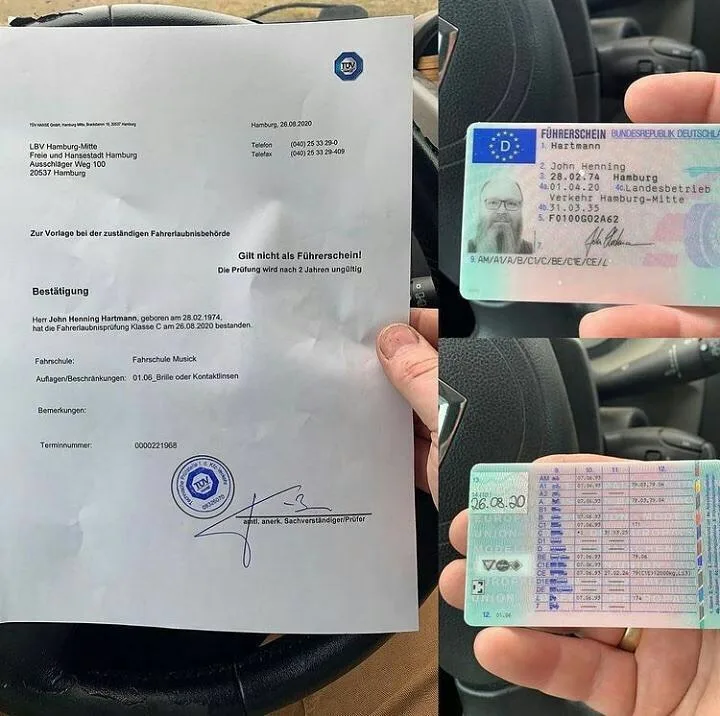
Issuance of License: Upon effectively passing both tests, candidates can look for the driving license at their local licensing authority. The license is issued for a period of 15 years, after which it should be restored.
Expense Breakdown
Obtaining a driving license in Germany involves numerous expenses, which can differ considerably depending on the region and the driving school picked. Below is a table that outlines normal costs:

| Expense | Approximated Cost (EUR) |
|---|---|
| Theory Course | 300 - 400 |
| Practical Lessons (10-20) | 1,500 - 2,500 |
| Medical Examination | 60 - 150 |
| Theoretical Exam Fee | 20 - 50 |
| Practical Exam Fee | 150 - 300 |
| Administration Fee | 30 - 50 |
| Total Estimated Cost | 2,080 - 3,400 |
Benefits of the German Driving License System
- High Standards of Road Safety: The strenuous training and screening ensure that drivers are well-prepared for the road.
- Thorough Training: Both theoretical knowledge and practical skills are highlighted, causing accountable driving.
- Recognition in the EU: The German driving license is acknowledged across EU countries, making it much easier for holders to drive abroad.
Frequently Asked Questions (FAQs)
1. The length of time does it take to get a driving license in Germany?
The duration can differ based on individual progress however typically takes about 3 to 6 months from the start of training to getting the license.
2. Is it possible to drive with a foreign license in Germany?
Yes, holders of a legitimate foreign driving license can drive in Germany for as much as six months. After that, they may need to look for a German license, depending on their home country's agreements with Germany.
3. Can I begin driving lessons before I am 18?
Yes, you can undertake theoretical classes at 17. Nevertheless, practical driving is only permitted as soon as you turn 18.
4. What if I stop working the driving test?
Prospects are permitted to retake the driving test. However, they might require to pay additional fees and complete further training.
5. Exist any exceptions for age restrictions?
Yes, there are some exceptions for young chauffeurs, such as the "begleitetes Fahren" (accompanied driving) program, which enables drivers as young as 17 to drive with a skilled grownup.
Browsing the German driving license system may appear daunting due to its intricacy, however understanding the procedure and requirements helps demystify it. With an emphasis on security, education, and accountable driving, Germany's system not just prepares individuals to drive vehicles but also cultivates a culture of road safety. Whether you are a resident wanting to obtain your license or a visitor wishing to comprehend the policies much better, this thorough guide works as an important resource. Pleased driving!
- 이전글정품 비아그라 구매 방법 총정리 | 비아스토어 가이드 26.07.10
- 다음글Guide To Crypto Game Casino: The Intermediate Guide On Crypto Game Casino 26.07.10
댓글목록
등록된 댓글이 없습니다.